01
Bench phantoms
Static and acoustically unlike a person. They prove the device functions — not that it functions in a body.
Ditto builds the computational human twin — and validates it against a physical twin it also controls. Run your device across realistic human anatomy, find where it breaks, and leave with evidence a reviewer will read.
Static and acoustically unlike a person. They prove the device functions — not that it functions in a body.
Expensive, slow, ethically costly, and anatomically wrong in ways that matter.
Correct — and far too late to be a design tool. By then you have committed.
Crossing that gap costs years and tens of millions, and today it is crossed largely blind.
Imaging becomes a simulation-ready mesh through an automated pipeline with hard quality gates. A mesh that fails its gate stops the pipeline rather than proceeding with a caveat.
A 12-lead ECG and an echo become a personalised heart. Bayesian inference returns a posterior, not a point fit — and names the parameters your data cannot determine.
Place it. Sweep it across a cohort. Get the failure envelope — which anatomies break it, and how much of the variance each parameter explains.
This runs in your browser. Every dot is a synthetic patient with its own anatomy and physiology; every evaluation places a point on the envelope. In the product these are real solver runs on real meshes — the shape of the answer is the same.
Excellent open-source physics already exists — openCARP, Chaste, SimVascular, FEniCSx, k-Wave, Pulse. None of it shares a patient-state object, enforces units across a boundary, or records whether a number was measured, inferred, or guessed from a 1994 paper on canine myocardium. Ditto builds the substrate.
A value that cannot say where it came from does not enter the twin. Not by convention — by construction. The stream on the left is the actual admission logic: units, uncertainty, provenance class, and a source population for anything claiming to be literature.
This is the argument of our peer-reviewed work on data stewardship barriers in precision-medicine digital twins.
Click any value to walk its provenance back to the root.
A simulator’s only currency is credibility, and credibility comes from validation against ground truth. The weakness of computational physiology is that ground truth is unobservable — you cannot measure the conduction velocity field in a living human heart.
So we manufacture it. A programmable phantom with known geometry, known material properties and a known flow waveform, imaged with real hardware. The difference between what we predict and what it measures is a direct, quantitative error bound.
This corpus cannot be scraped, cannot be downloaded, and is expensive for anyone else to reproduce. It is why a device engineer believes the simulator.
We are at tier 1. Every credibility report we generate says so, names the goals it does not meet, and cannot suppress that section. A reviewer who finds an unstated gap discounts the whole submission.
Every architectural decision in H1 is chosen to be an H3 building block. The substrate does not care which organ it is describing — which is what turns a device-validation tool into a platform.
Cardiovascular device validation. Revenue, no FDA clearance required for the tool itself, and a buyer with an existing budget line.
Whole-body homeostasis and drug distribution. The cardiac twin becomes one organ inside a coupled system — lung, kidney, PBPK.
Mechanisms medicine does not understand. Pyrazinamide has been first-line TB therapy since the 1950s and its mechanism is still contested, because the answer spans scales no single model can hold.
H2 is not funded until H1 has revenue. H3 is not funded until H2 validates a cross-organ prediction. We would rather state the gate than sell the vision.
Explore the design space in days. Find the failure modes three hand-segmented anatomies were never going to show you.
Computational evidence is accepted in principle and brutal in practice. We generate the credibility argument automatically, from the runs.
Add computational validation to your services without building a simulation group. You own the client; Ditto is the engine.
AI in Medicine · ISSN 3042-6707
DOI 10.3390/aimed1030020 ↗2026 AI in Health Conference · Rice Ken Kennedy Institute
Poster #154 ↗
Prototyping and clinical translation inside the Texas Medical Center with TMC Innovation and the EnMed Engineering Innovation Center.
We aren’t just building a model.
We are building the industry reference.

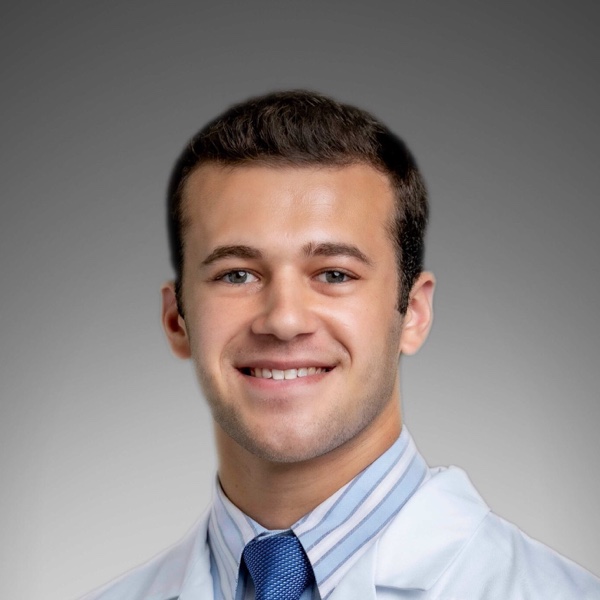
BS Computer Science, Texas A&M University
MD/MEng Candidate, TAMU School of Engineering Medicine
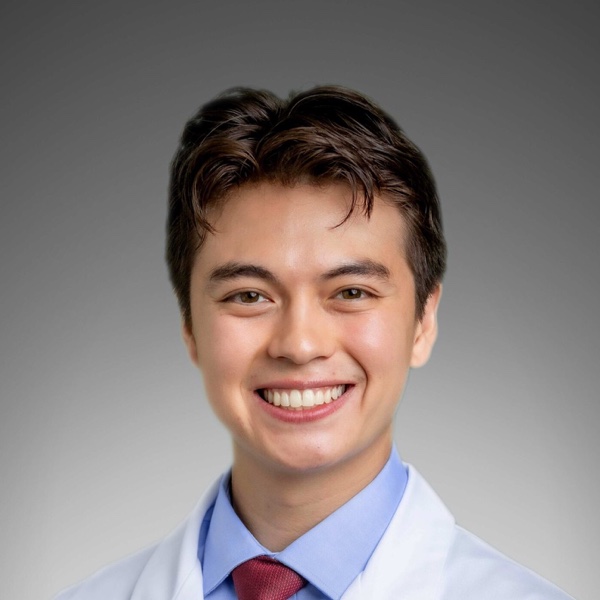
BS Aeronautical & Astronautical Engineering, Purdue University
MD/MEng Candidate, TAMU School of Engineering Medicine
BS Electrical Engineering, University of Notre Dame
MD/MEng Candidate, TAMU School of Engineering Medicine
Executive Director
Center for Genomic and Precision Medicine

Internal Medicine, Mayo Clinic
Cardiology, Cleveland Clinic

Houston Methodist DeBakey Heart & Vascular Center
Weill Cornell Medical College
Cohort studies, platform access, and V&V40 credibility packages for cardiovascular device programmes. Investors: the deck is passphrase-protected — ask and we'll send it.